Culvert Extension, Catch Basin Install, and Drainage Overhaul
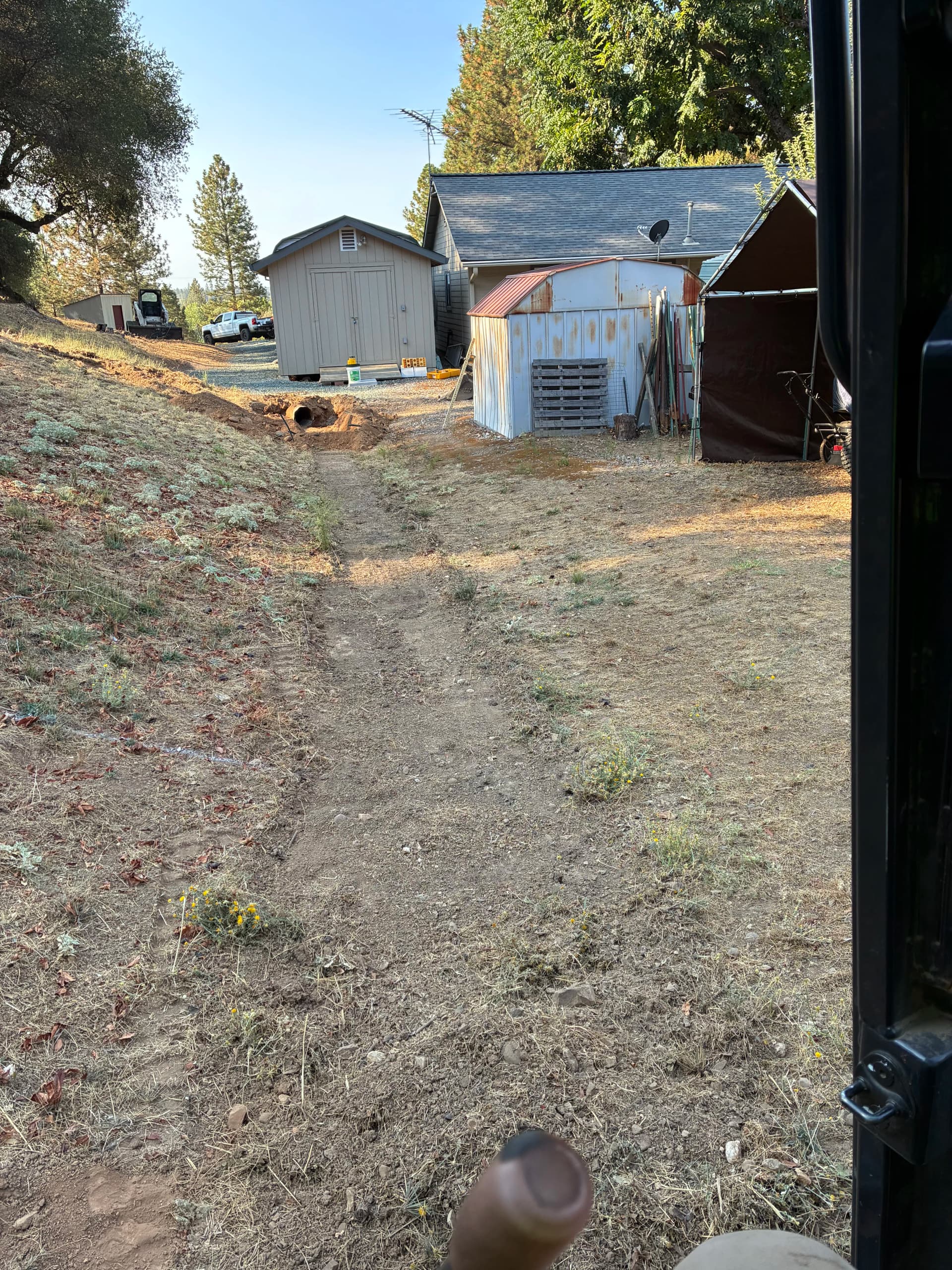
Water that has nowhere to go will always find somewhere to go - and it's usually somewhere you don't want it. On this job, we were dealing with an existing culvert that wasn't doing its job anymore. It was undersized, clogged, and the surrounding area had no real system in place to move water off the property effectively.
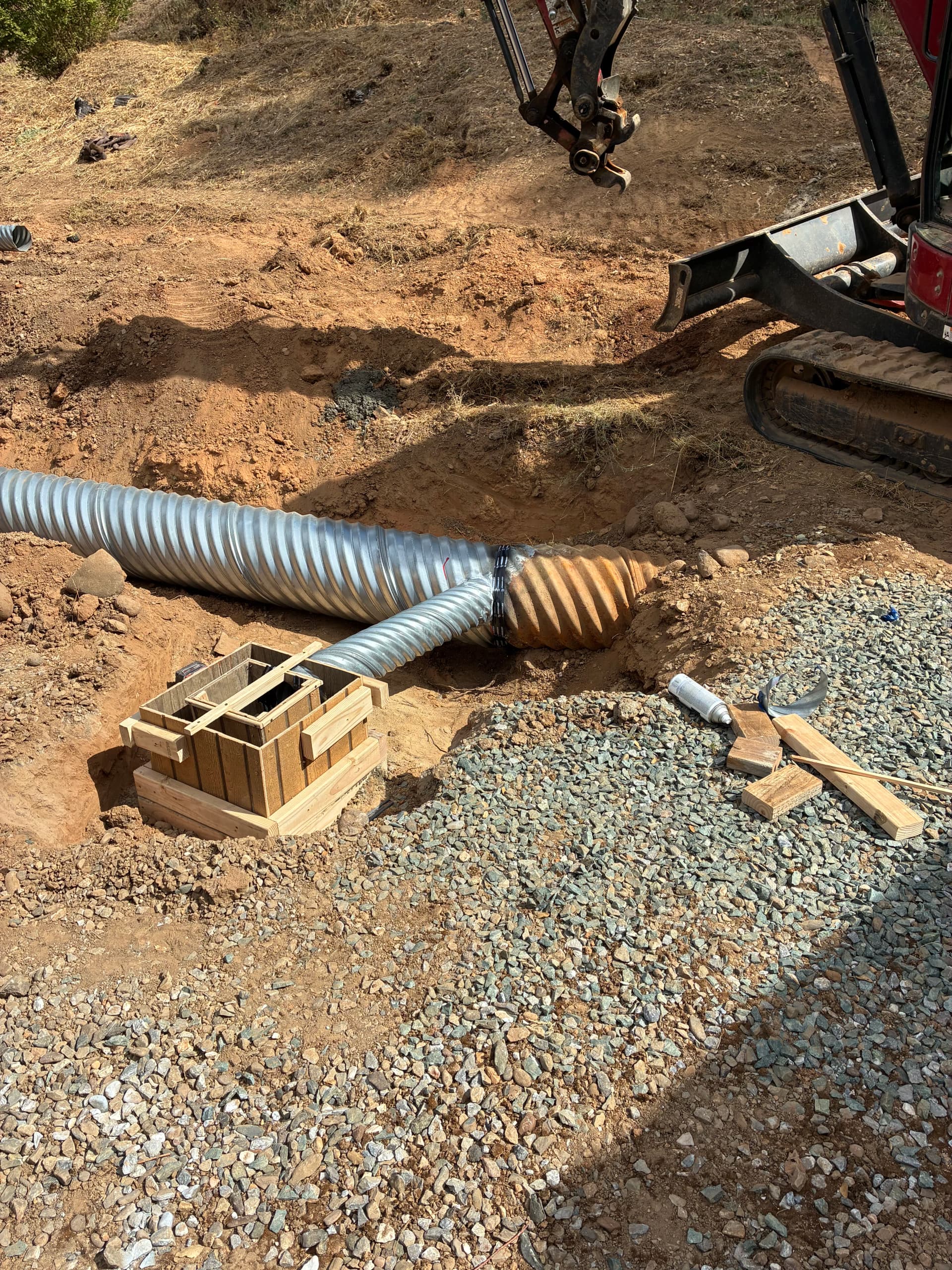
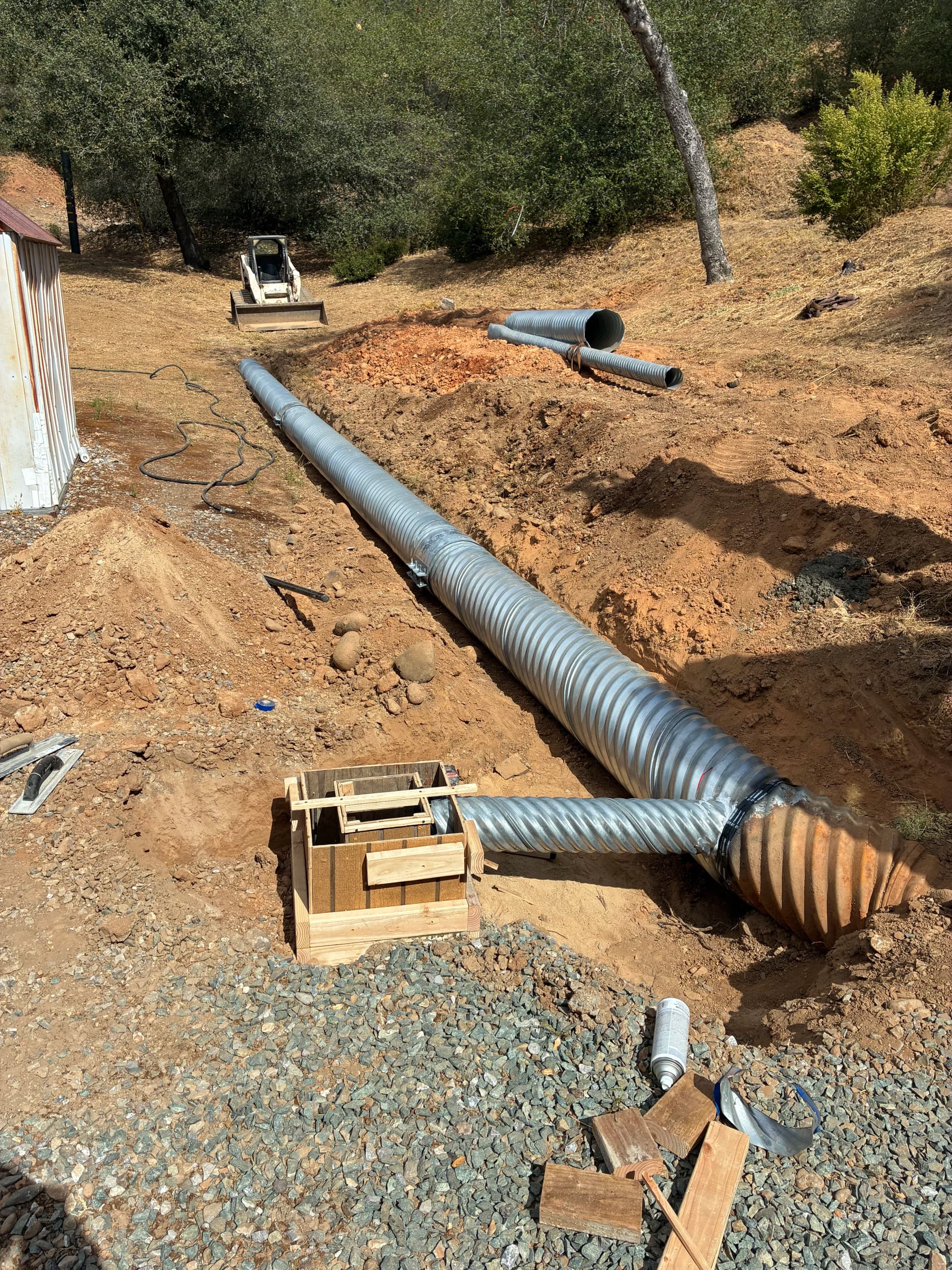
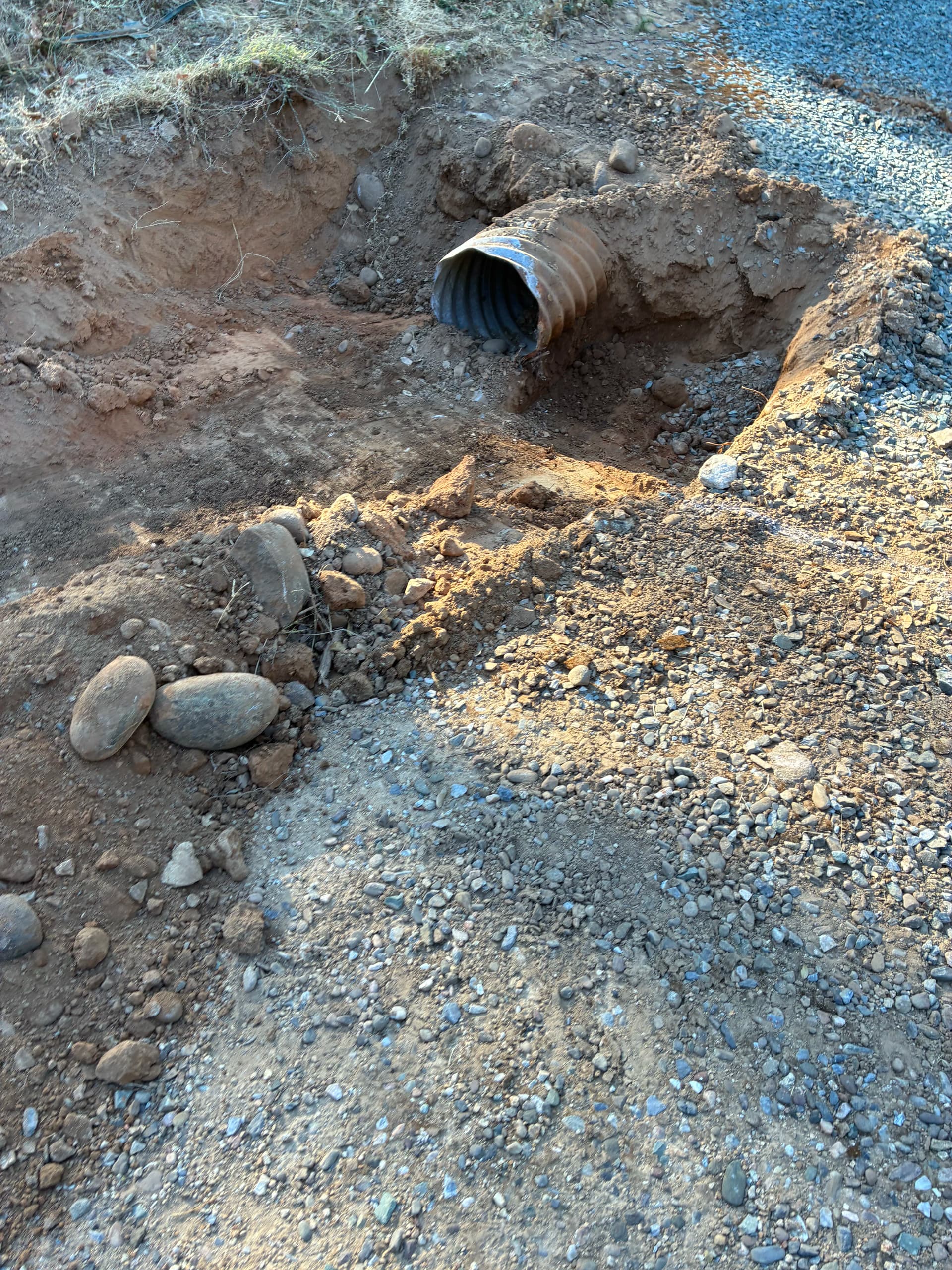
We started by cleaning out the existing culvert and then extending it with new corrugated metal pipe. You can see the scale of what that looks like mid-installation - two large-diameter pipes laid into the trench, connected to a catch basin that we formed and set in place. The catch basin is what ties it all together. It gives the water a controlled entry point into the system rather than letting it sheet across the surface and erode everything in its path.
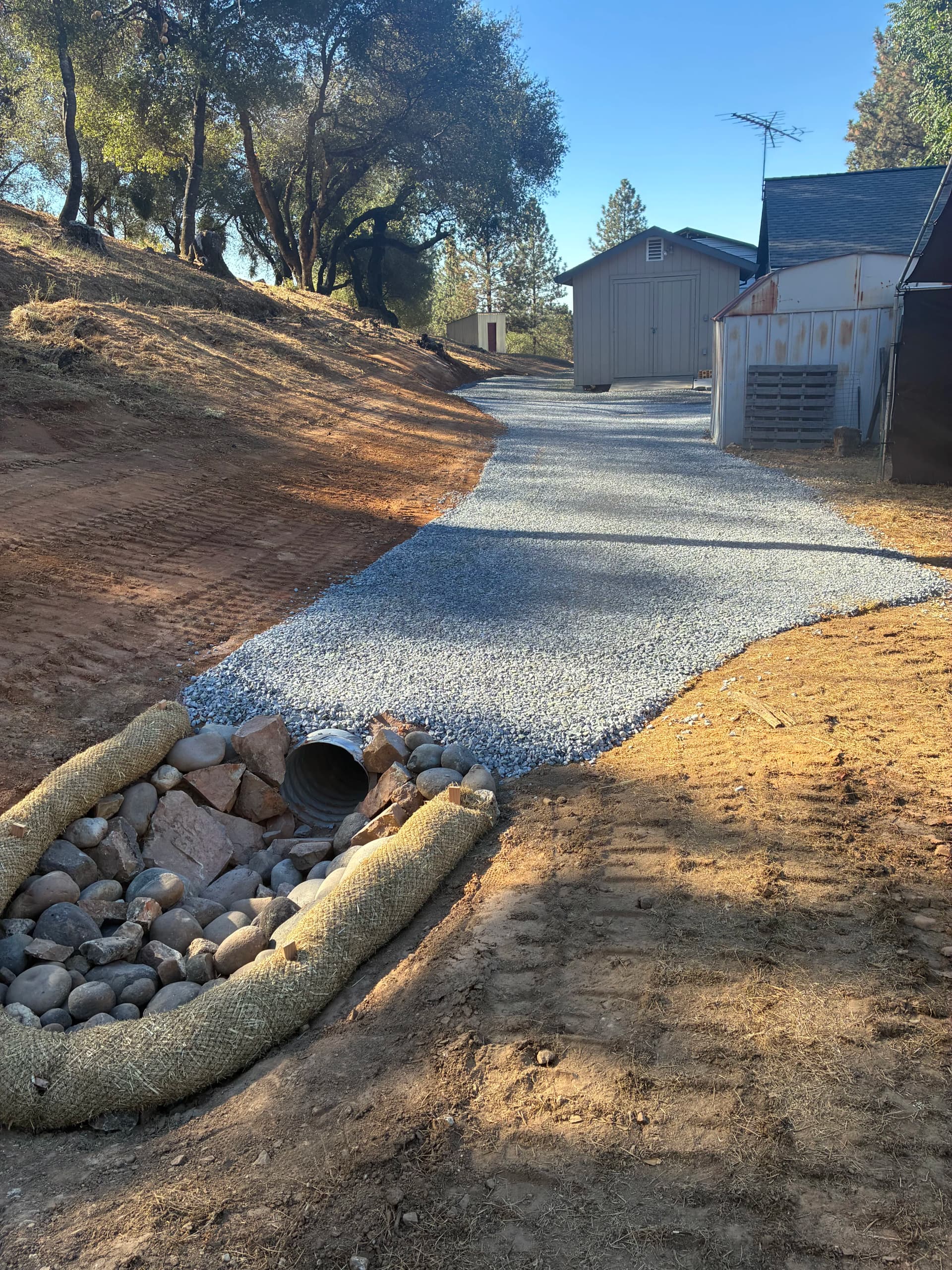
Slope shaping was a big part of this too. Getting the grade right matters just as much as the pipe itself. If the ground isn't shaped to direct water toward the inlet, you're only solving half the problem. We finished the outlet end with rip rap - the rock and erosion control fabric you see at the base of the driveway - to protect the soil where the water exits. That's a detail a lot of people skip, and it's what keeps the whole system intact after the first heavy rain.
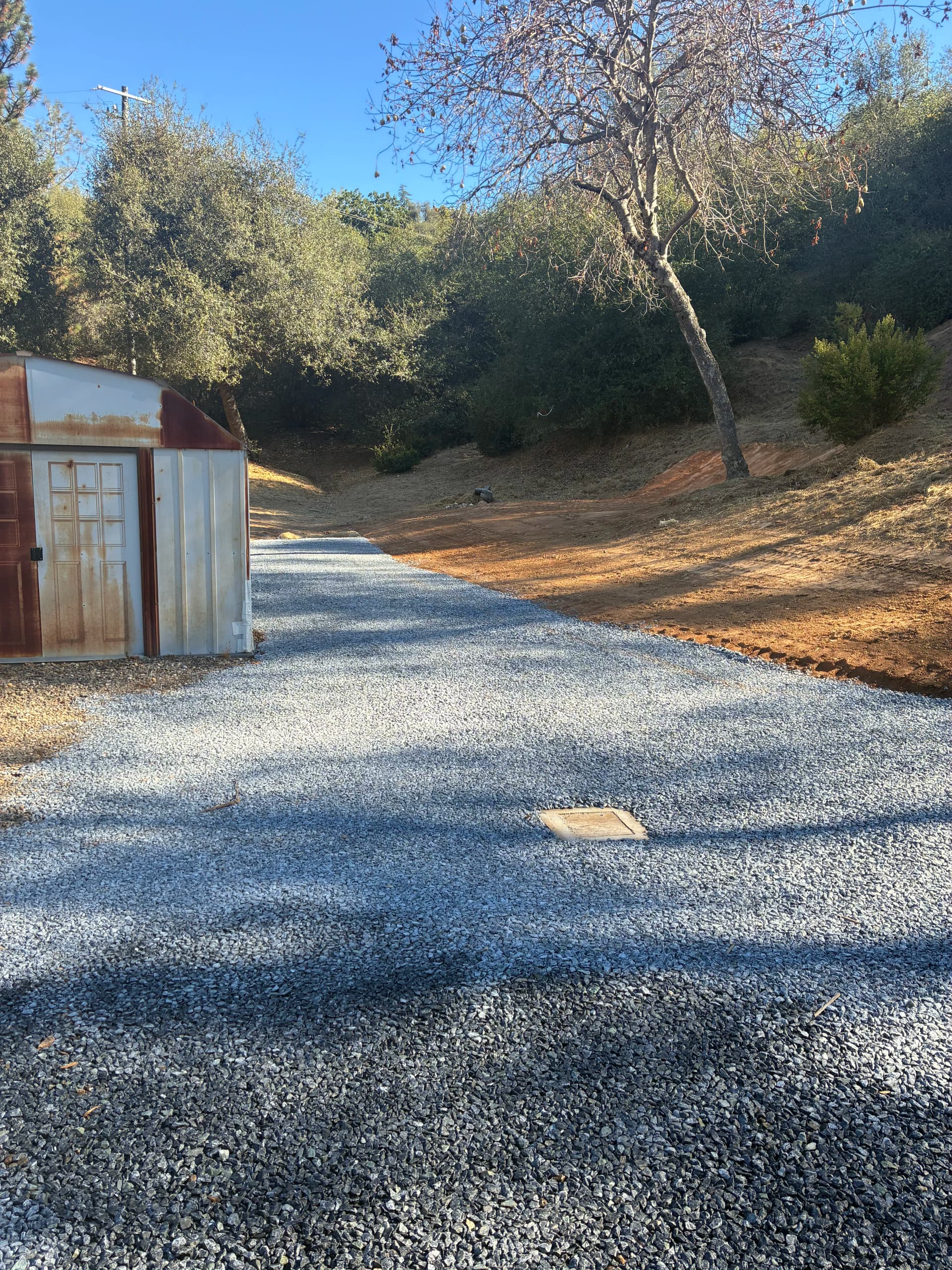
The finished driveway got a fresh layer of gravel laid out clean across the full width, with the catch basin cleanout access point sitting flush at the surface. Everything is set up so water drains off, gets captured, moves through the pipe, and exits at a protected outlet. That's how drainage is supposed to work. It's not complicated, but it has to be done right.
Good drainage work isn't something you notice when it's working - you only notice it when it isn't. If your property is holding water, washing out, or dealing with a culvert that's past its useful life, this is the kind of work that protects everything else on your property for years to come.