Sewer Main Line Replacement Done Right From the Ground Up
Replacing a sewer main line is not a small job. It's not just about digging a trench and dropping in new pipe. The work that happens after the pipe goes in - the backfill, the compaction - that's what actually determines whether the ground holds up long-term or settles and causes problems down the road.
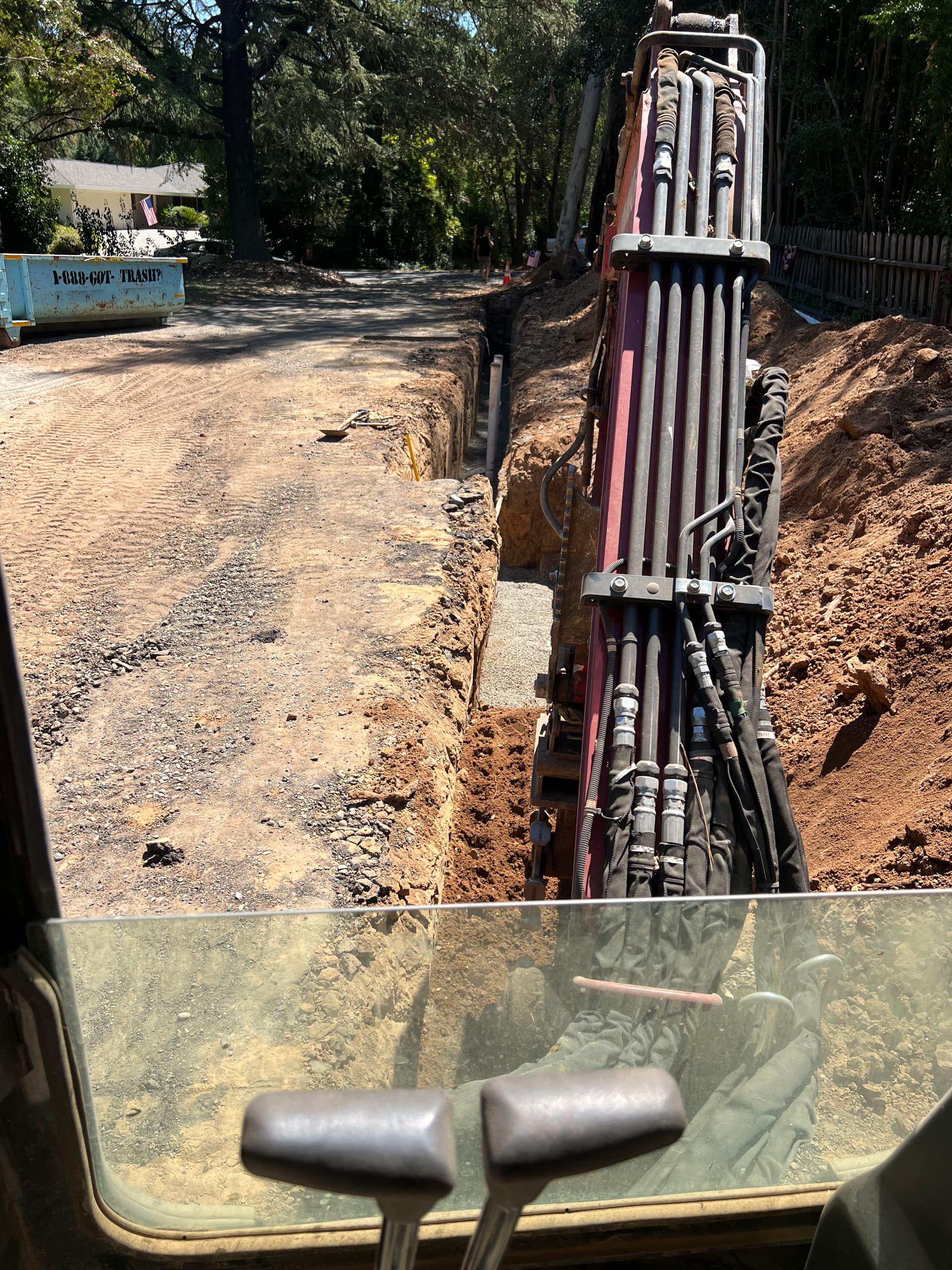
Here's what we were working with on this one. A long, clean trench cut straight through a residential driveway area for a full sewer main replacement. That kind of trenching takes precision. You're working close to structures, dealing with existing soil conditions, and you have to keep the trench walls clean and stable while the work gets done.
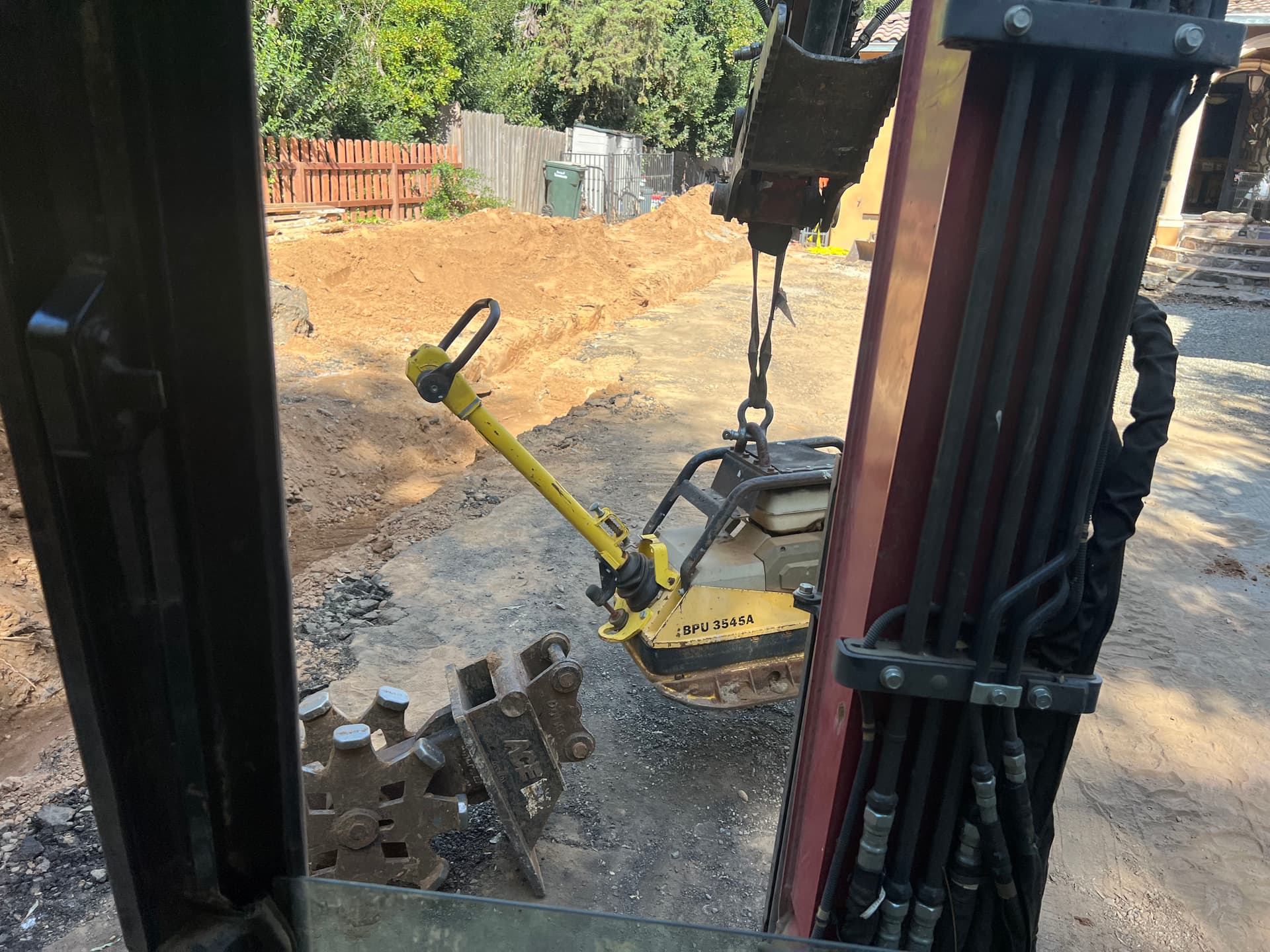
Once the new line is in, the backfill process has to be done in lifts - meaning you don't just dump soil back in all at once. You fill in controlled layers and compact each one before adding the next. That's how you avoid the soft spots and sinkholes that show up months later when the job wasn't done carefully. We use plate compactors to make sure every layer is tight before we move on.
This is the kind of detail work that most people never see, but it's the difference between a job that holds and one that comes back to haunt you. Utility excavation like sewer main replacement is a core part of what we do, and we take the process seriously from the first cut to the final grade.
Solid ground is not an accident. It's the result of doing every step the right way, even the steps nobody photographs. That's the standard we hold ourselves to on every job.